
If you’ve ever asked, “Why aren’t my leads converting?”… you’re in the right place. This 2026 guide will break down the 7 stages of sales funnel, share real-world examples, provide templates you can implement today to move prospects from strangers to loyal advocates.
You can think of this as the complete guide to growing your business in 2026 and beyond!
Sales funnels are the backbone of every business’s successful marketing strategy. In fact, research shows companies with a structured funnel convert up to 3x more leads than those without one. Yet, so many businesses struggle with creating a sales funnel that turns visitors into customers.
Whether you’re a small business owner, marketer, or startup founder, mastering the stages of sales funnel is the most practical way to scale conversions and revenue.
TL;DR: The 7 Stages of Sales Funnel (Quick Overview)
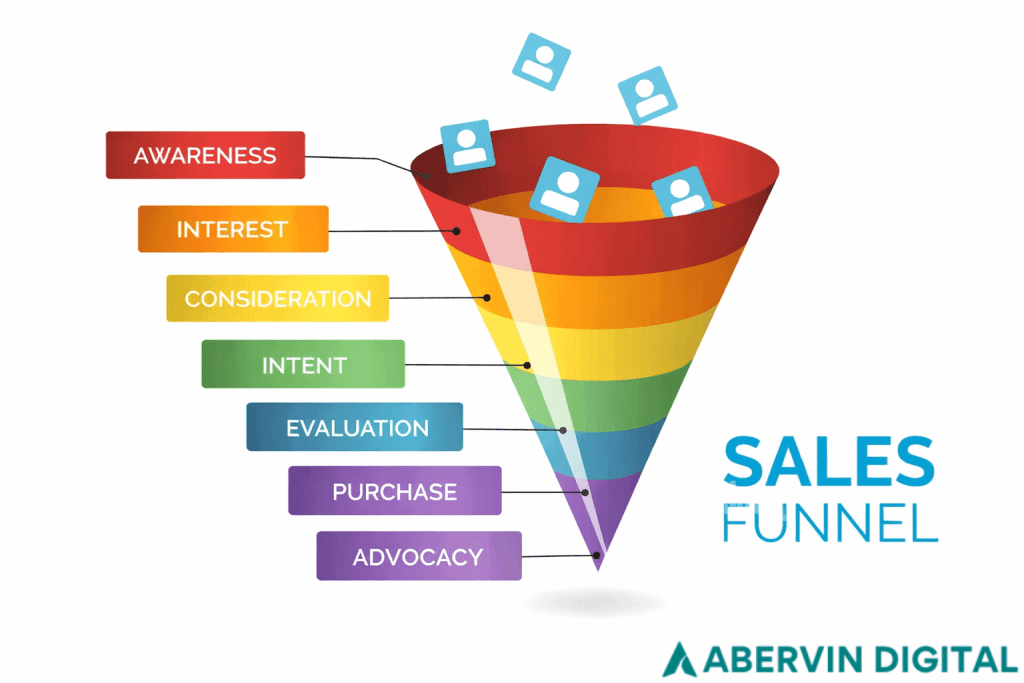
A sales funnel is the journey a potential customer takes from first discovering your brand to becoming a loyal, repeat buyer. Below are the seven core stages of a modern sales funnel, explained briefly.
- Awareness: People first discover your brand through content, ads, search, or social media.
- Interest: Prospects engage with your content and start learning more about your offer.
- Consideration: Leads compare your solution with alternatives and evaluate trust signals.
- Intent: Prospects show buying signals like trial sign-ups, cart adds, or quote requests.
- Evaluation: Final objections are addressed through demos, testimonials, guarantees, or follow-ups.
- Purchase: The prospect completes the transaction and becomes a customer.
- Retention & Advocacy: Customers are nurtured post-purchase to drive repeat sales, referrals, and loyalty.
These stages help businesses understand where prospects drop off, what content to serve, and how to increase conversions at every step.
What Is a Sales Funnel? Understanding the Stages of Sales Funnel
As we stated earlier, a sales funnel is a visual representation of the buyer journey. It shows how leads progress from first learning about your business to becoming paying customers… and ideally, loyal advocates.
Think of it like this: your funnel is a roadmap for human behavior. It identifies where prospects get stuck, where they drop off, and where you need to guide them more effectively.
If you’re new to funnel thinking, it helps to understand the foundation first. We previously broke this down into a simpler framework covering the 3 core stages of sales funnel, which gives you a high-level mental model before layering on the full 7-stage system explained in this guide
Why Every Business Needs a Funnel
- Predictable growth: Knowing the stages of sales funnel allows you to forecast sales.
- Optimized marketing spend: You focus resources where they’ll generate the most impact.
- Personalized communication: By mapping the journey, you know exactly what content a lead needs at each stage.
Sales Funnel vs. Sales Pipeline – What’s the Difference?
People often confuse both but while the stages of sales funnel and the stages of sales pipeline are related, they are not the same. A sales funnel focuses on marketing and the customer journey. It’s about awareness, interest, decision-making, and retention. On the other hand, a sales pipeline tracks sales activity and deals in progress.
Here’s a simple way to understand the difference:
- Sales Funnel: Leads discover your website → download a guide → subscribe to emails → purchase.
- Sales Pipeline: Lead enters CRM → sales call → proposal → closed deal.
When marketing and sales work together using both funnels and pipelines, businesses increase conversion rates and shorten sales cycles.
The 7 Stages of Sales Funnel Explained In Full Detail
Now, let’s break down the stages of sales funnel. We’ll go over the unique objectives, tactics, and metrics to track in each stage.
Stage 1 of the Stages of Sales Funnel: Awareness (Getting Seen)
The awareness stage is the first step in the stages of sales funnel. At this point, potential customers are discovering your brand, they might not even know your product exists. At this stage, first impressions are everything. Your goal isn’t to sell immediately…it’s to build trust and credibility.
To do this, you want to create content that answers common questions or solves minor pain points. For instance, a blog on “How to do X,Y,Z in your industry ” can attract potential leads without pushing a sale.
Here’s how to do this:
- Use Content marketing (blogs, videos, social media)
- Run paid ads targeting your ideal audience
- SEO optimization to capture organic search traffic
Let’s use HubSpot as a Case Study
HubSpot attracts leads with free marketing guides and blog content. A small business owner searching “how to grow email list” finds HubSpot’s resources, subscribes, and enters the funnel. You can replicate this by creating an Awareness Content Calendar that looks something like this:
| Week | Content Type | Platform | Goal |
|---|---|---|---|
| 1 | Blog post: “10 Email Marketing Tips” | Website | Capture organic leads |
| 2 | LinkedIn infographic | Build brand awareness | |
| 3 | Paid FB Ad | Target small business owners |
Awareness Stage Metrics to Track
At the awareness stage, success is measured by visibility, reach, and first-touch engagement, not immediate sales. These metrics tell you whether the right people are discovering your brand.
1. Impressions
Impressions measure how many times your content or ads are shown to potential customers, and they represent the absolute top of your funnel where visibility begins. This metric matters because if impressions are low, the entire funnel is already compromised, no matter how strong your offer is later, people can’t convert on what they never see.
You can track impressions across platforms like Google Search Console for organic visibility, Google Ads for paid search, Meta Ads Manager for social advertising, and X or LinkedIn analytics for content distribution.
2. Reach
Reach measures the number of unique people who see your content, giving you a clearer picture of how far your brand message is spreading beyond the same repeat viewers. This metric matters because awareness is not just about frequency; it’s about expansion. If your reach stays flat over time, it usually means your content is circulating within the same audience bubble instead of attracting new eyes.
You can expand your reach by experimenting with new targeting parameters, collaborating with complementary brands, or testing different content formats like short-form video, carousels, or long-form posts.
3. Website Traffic (Users & Sessions)
Website traffic tracks how many people move from awareness channels into your owned ecosystem, measuring both unique users and total sessions. This metric matters because traffic confirms that your awareness efforts are actually working to pull people off platforms you don’t control and into a space where deeper engagement can happen.
Your traffic should be segmented by source such as organic search, paid ads, social media, or referrals. Note that if your traffic increases but engagement stays low, it’s a strong signal that your messaging isn’t aligned with visitor expectations or that your landing pages fail to clearly communicate value.
4. Organic Search Clicks & Keyword Rankings
Organic search clicks and keyword rankings measure how often users choose your site from search results and how visible you are for relevant queries. This metric matters because SEO traffic compounds over time and acts as a long-term authority signal in your market.
The most valuable keywords at this stage are informational and problem-aware searches, such as “what is,” “how to,” and solution-exploration queries. If you have high impressions but few clicks, the issue usually is often mistaken as a content quality issue when it is in fact your meta titles and descriptions failing to get people curious or clearly communicate the relevance of your offer.
5. Engagement Rate
Engagement rate captures how people interact with your content through actions like likes, comments, shares, saves, time on page, or video watch time. This metric matters because engagement is one of the earliest trust signals in the funnel. Before someone intends to buy, they first show interest by paying attention.
Strong engagement indicates that your message resonates emotionally or practically with your audience. If someone spends 1.5 to 3 minutes or more for on your page or they watch 30 to 50 percent of a video then it’s an indicator that the content works.
If you post a content and it earns unusually high engagement, repurpose that content across channels, formats, and stages of the funnel.
6. Bounce Rate
Bounce rate measures the percentage of visitors who leave your site without taking any meaningful action, such as clicking, scrolling, or navigating further. This metric matters because a high bounce rate often indicates a disconnect between what visitors expected and what they actually experienced.
Common causes include slow page load times, unclear above-the-fold messaging, or a weak value proposition that fails to immediately answer “Why should I care?”
If you have a high bounce rate, tightening the first few seconds of the experience through faster pages, clearer headlines, and stronger internal links that guide visitors deeper is a better fix than just adding more content.
7. Cost Per Thousand Impressions (CPM) – Paid Traffic
CPM measures how much you pay to reach 1,000 people through paid advertising. This metric matters because it reflects the efficiency of your awareness campaigns at scale. Lower CPMs mean you’re buying attention cheaply, giving you more room to test messaging and creatives without burning budget.
When CPMs spike, it’s often a sign of poor audience targeting, creative fatigue, or ads that platforms deem low quality. If you’re having CPM issues, don’t increase your ad spend; refresh your creatives, tighten your audience definitions, or shift to less competitive placements/ keywords.
8. New vs Returning Visitors
This metric compares how many visitors are discovering your brand for the first time versus those who are coming back. Your awareness stage should be heavily weighted toward new users. If returning visitors dominate your traffic, it often means your content is circulating well but not escaping your existing audience.
A healthy awareness strategy continuously feeds the funnel with fresh users while allowing returning visitors to move naturally into deeper stages like interest and consideration.
9. Brand Search Volume
Brand search volume measures how often people actively search for your brand name or branded terms. This metric matters because it shows mindshare, not just reach. When people remember your name well enough to search for it, awareness has crossed from passive exposure into active recall.
You can track brand keywords separately in Google Search Console so you can clearly see whether your awareness efforts are translating into brand recognition. Your brand search volume should rise following content or ad campaigns, making this metric a powerful indicator of long-term growth.
Stage 2 of the Stages of Sales Funnel: Interest (Capturing Attention)
Once someone is aware of your brand, they move into the interest stage. At this point in the stages of sales funnel, prospects are curious but not yet ready to buy. They are evaluating whether your product or service can solve a problem or fulfill a need. This stage is all about engagement, trust-building, and information gathering.
Your objective at this point is to move prospects from passive awareness into active engagement, build trust by showing you understand your audience’s pain points, and capture their information like emails or social handles in one seamless flow.
Here’s how to do this:
1. Provide Downloadable Resources
High-performing interest-stage content is specific, practical, and immediately useful. You can offer checklists, eBooks, templates, or guides that solve one specific pain point – not ten.
2. Webinars & Live Q&A
Interactive sessions like webinars help demonstrate expertise and humanize your brand. When prospects are able to ask questions and get real-time answers they feel more connected to your brand.
3. Educational Email Campaigns
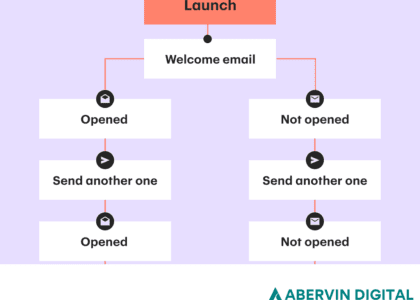
At this stage you have their emails but don’t push sales immediately. Send a sequence of value-focused emails that include tips, mini case studies, and actionable takeaways, ideally structured as a drip campaign that delivers value progressively. If you’re unsure how this works, this simple guide explains how email drip campaigns work in practice.
So let’s put this into perspective. Let’s say a visitor downloads a free “Funnel Optimization Checklist”. They enter your email sequence:
Template: Interest Stage Email Sequence (3 Emails)
| Subject | Body | CTA | |
|---|---|---|---|
| 1 | Welcome + Checklist | Deliver the checklist and thank them for subscribing | “Download your checklist now” |
| 2 | Tips & Insights | Provide 3 actionable tips with examples | “Apply these tips today” |
| 3 | Invite | Promote a webinar/demo tailored to their interest | “Reserve your seat” |
Interest Stage Metrics to Track
At the awareness stage, metrics tell you if people see you. At the interest stage, metrics tell you if people who see you care. This is the first point in the stages of sales funnel where behavior matters more than reach.
These metrics reveal whether your engagement strategy is actually pulling prospects deeper into the funnel or quietly losing their attention before intent ever forms.
1. Email Open Rate
Email open rate shows whether your subject lines and sender reputation are strong enough to get your readers curious when your message lands in the inbox. This metric matters because low open rates signal a breakdown in relevance which means it’s either the promise isn’t clear, the timing is off, or your audience doesn’t yet trust your brand enough to engage.
Since these prospects already opted in, failure here means you’re losing attention from people who explicitly raised their hand, making open rate one of the clearest indicators of early-stage messaging alignment.
2. Email Click-Through Rate (CTR)
Email click-through rate measures whether readers take the next step after opening your message by engaging with links, resources, or calls to action. This metric matters because clicks represent movement, not passive interest.
A healthy CTR signals that your content resonates and that prospects are ready to explore deeper ideas, tools, or solutions. When opens are strong but clicks lag, it usually means the content inside the email doesn’t deliver on the promise of the subject line or fails to clearly communicate why the next step is worth taking.
3. Resource Download Completion Rate
Resource download completion rate tracks how many people actually consume the guide, checklist, or template they requested. This metric matters because requesting a resource shows curiosity, but completing it shows real engagement.
High drop-off rates often indicate a mismatch between the promise and the delivery, content that feels overwhelming, or value that isn’t immediately obvious. Strong completion rates, on the other hand, signal that your resource hits a real pain point and positions your brand as helpful rather than promotional.
4. Webinar or Event Sign-Ups
Webinar and event sign-ups measure a prospect’s willingness to invest time, not just attention. This metric matters because time commitment is a stronger signal of interest than an email opt-in alone.
When someone registers for a live or scheduled experience, they’re implicitly saying your insight is worth prioritizing. Low sign-up rates often point to unclear outcomes or generic positioning, while strong performance here suggests your brand is earning authority and trust early in the relationship.
5. Time on Page and Scroll Depth
Time on page and scroll depth show how deeply prospects engage with your content once they arrive. This metric matters because skimming and reading lead to very different conversion paths later in the funnel.
Longer time on page combined with deeper scroll depth usually signals comprehension and relevance, not confusion. When users bounce quickly or stop scrolling early, it’s often a sign that the content doesn’t meet expectations, lacks clarity, or fails to hook the reader emotionally or practically within the first few seconds.
6. New Subscriber Growth Rate
New subscriber growth rate measures how consistently your interest-stage assets attract fresh leads over time. This metric matters because a healthy funnel should feed itself continuously at this stage, not rely on one-off campaigns.
Steady growth indicates that your resources, messaging, and distribution channels are aligned with real audience needs. When growth slows or stalls, it’s often a sign that offers need refreshing, distribution needs expansion, or audience pain points have shifted.
Together, these metrics act as an early-warning system. They tell you what’s working and reveal where curiosity turns into commitment and where attention dies.
Stage 3 of the Stages of Sales Funnel: Consideration (Nurturing Leads)
The consideration stage is the point in the stages of sales funnel where interest turns into judgment. At this point in the stages of sales funnel, prospects already accept that they have a problem. The question has shifted. They are no longer asking “Do I need a solution?” They are asking something sharper and more dangerous
“Is this the right solution, or should I choose something else?”
At this stage, leads actively compare options. They look at competitors, read reviews, analyze features, and evaluate risk. Emotion still plays a role, but logic begins to dominate decision-making.
This is one of the most fragile points of the stages of sales funnel. Get it right, and you earn trust. Get it wrong, and prospects quietly disappear. Your goal here is to build confidence in your offering.
Most prospects have a fear of making the wrong decision and this is often the biggest blocker to conversion. Your job is to neutralize it with reassurance that your solution works in real-world conditions, not just in marketing copy. At this stage, you are no longer competing with “doing nothing.” You are competing with other solutions and the way to win is to demonstrate value compared to alternatives.
Here’s how to do this:
1: Case Studies & Customer Testimonials
Case studies build trust by showing real results instead of promises. Instead of telling prospects what could happen, they show what already has happened. The most effective examples clearly outline the problem, actions taken, and measurable outcomes, using specific numbers and timelines. A statement like “This client loved our service” builds little confidence, compared to “Demo bookings increased by 42% in 60 days without increasing ad spend” removes doubt.
Use testimonials because people want to know someone like them has used your solution successfully. A SaaS founder wants proof from another SaaS founder. An e-commerce brand wants reassurance from someone selling products online. Testimonials convert best when they are short, relevant, and industry-specific, with video and before-and-after proof reducing skepticism and increasing confidence.
2: Product Guides & Comparison Charts
At the consideration stage, clarity matters more than persuasion. Prospects want help answering practical questions: how your solution works, how it compares to alternatives, and what the tradeoffs are. Detailed product guides help prospects evaluate options without feeling manipulated. Transparent comparisons that include features, pricing, setup effort, and best-fit use cases increase trust and position your offer as the right fit.
To position your offer as the right fit, you can frame your marketing as “If you want the cheapest option, this may not be the best fit. If you want predictable results and hands-on support, this is where we win,” so this reframes the decision around fit instead of price and disarms skepticism.
3: Retargeting Ads
Retargeting at this stage should reinforce credibility, not create pressure. Effective ads focus on social proof, objection handling, and simple explanations of what happens after signup. When relevance replaces urgency, prospects feel reassured rather than pushed, making conversion more likely.
A strong retargeting message reassures instead of pushing. For example, “Still comparing funnel solutions? See how [Brand] increased conversions by 38% without rebuilding their website.” This reinforces confidence instead of forcing a premature decision.
Let’s use Dollar Shave Club as a case study
Dollar Shave Club is often praised for awareness-stage virality, but their consideration-stage execution is what turned attention into revenue. After prospects entered their ecosystem, the brand focused on education rather than pressure.
Their emails clearly explained product benefits and convenience. They leaned heavily on customer reviews and testimonials to normalize the decision. Most importantly, they reduced perceived risk with a strong money-back guarantee. The result was prospects felt safe choosing them over traditional retail brands.
The lesson here is when risk feels low, decisions feel easy.
Template: Consideration Stage Proof & Evaluation Framework
| Asset Type | Prospect Question It Answers | What to Include | Goal |
|---|---|---|---|
| Case Study | “Has this worked for someone like me?” | Starting problem, actions taken, measurable outcome | Build credibility |
| Testimonial | “Can I trust this brand?” | Short quote with a specific result | Reduce skepticism |
| Comparison Chart | “How does this compare to alternatives?” | Features, pricing, effort, best-fit use cases | Aid evaluation |
| Product Guide | “How does this actually work?” | Step-by-step explanation with visuals | Increase clarity |
| FAQ / Objection Page | “What could go wrong?” | Honest limitations, guarantees, risks | Reduce fear |
Consideration Stage Metrics to Track
At the interest stage, metrics tell you whether people are engaging. At the consideration stage, metrics tell you whether people are evaluating. This is the point in the stages of sales funnel where trust, proof, and reassurance directly influence whether prospects move forward or drop out.
These metrics reveal whether your confidence-building efforts are working or whether doubt is quietly winning.
1. Case Study Engagement Rate
Case study engagement rate measures how prospects interact with proof-based content, including time on page, scroll depth, and clicks on supporting assets. This metric matters because case studies are often the deciding factor for logical buyers. Low engagement suggests the story feels irrelevant or too generic, while strong engagement signals that prospects see themselves in the outcome.
2. Comparison Page Clicks and Time on Page
This metric tracks how often prospects visit and stay on comparison or product guide pages. It matters because time spent here reflects active evaluation. Short visits usually indicate confusion or lack of clarity, while longer sessions suggest genuine consideration. If prospects bounce quickly, your comparisons may be unclear or too biased to feel trustworthy.
3. Retargeting Ad Click-Through Rate
Retargeting CTR shows whether your follow-up messaging resonates with prospects who already know you. This metric matters because consideration-stage retargeting is about reinforcement, not discovery. Low CTR often means your message is too generic or too aggressive. High CTR signals that your proof points are landing at the right time.
4. Demo, Consultation, or Trial Requests
Requests for demos, consultations, or trials represent a major shift in intent. This metric matters because it reflects readiness to move from evaluation into decision-making. When this number is low, it often means prospects still feel uncertain about outcomes, pricing, or effort required.
5. Objection-Handling Content Engagement
This measures interaction with FAQs, pricing explanations, guarantees, and “how it works” pages. It matters because objections need to be addressed. Strong engagement here suggests prospects are actively resolving doubts. Weak engagement often means objections remain unanswered.
Together, these metrics show interest and reveal whether trust so when consideration metrics improve, intent naturally follows.
Stage 4 of the Stages of Sales Funnel: Intent Stage (Showing Buying Signals)
The intent stage is where prospects begin to behave like buyers, even if money hasn’t changed hands yet. In the stages of sales funnel, this is the moment when the prospect is no longer browsing casually. They are clicking pricing pages, starting trials, adding items to carts, requesting a quote etc.
The mindset is: “This looks good… let me move forward.”
At this stage, your job is no longer to persuade from scratch. Your responsibility now is to remove friction, reinforce confidence, and make forward movement feel safe. Intent is fragile. Small obstacles can undo weeks of trust-building if you’re not careful.
Prospects in the intent stage often show readiness through behaviors like repeatedly visiting pricing pages, adding products to a cart, starting a free trial, requesting a quote or proposal, or replying to sales emails with specific questions about setup, outcomes, or pricing. These actions signal the prospect wants to move forward, yet they’re still scanning for reasons not to.
The objective of the intent stage is threefold. First, you want to encourage the final decision without pressure. This isn’t the moment for aggressive persuasion; it’s the moment for reassurance. Second, you need to reduce friction in the purchasing process because every extra step, delay, or point of confusion becomes a reason to pause. Third, you must reinforce value at the exact moment of action. Buyers want confirmation that they’re making a smart, defensible choice, especially if they’ll need to justify it to a team, a boss, or themselves later.
Here’s how to do this.
Use Incentives
Incentives can be effective at the intent stage, but only when used strategically. The best incentives feel relevant to the buyer’s current situation, are clearly time-bound, and reinforce value rather than cheapen it. Examples include a bonus onboarding session, an extended trial period, a limited-time discount tied to a deadline, or free implementation or setup.
The goal is not to bribe the prospect into buying, but to reduce perceived risk or effort. Overusing discounts trains prospects to wait instead of act, which weakens intent over time rather than strengthening it.
Simplify The Payment Process
Simplifying the checkout experience is often the highest-impact change at this stage. Friction kills intent faster than price. When prospects are ready to act, every unnecessary form field, unclear step, or slow-loading page increases doubt.
Make the process easier by removing nonessential fields, optimizing the entire flow for mobile first, offering multiple payment options, and clearly displaying trust signals such as security badges, guarantees, and refund policies. Even small improvements matter. In many cases, reducing a single form field or clarifying one step in the process can increase conversions by double digits because it reduces cognitive load at the moment of decision.
Email & SMS Follow-Ups
Personalized follow-ups, whether through email or SMS, also play a critical role in converting intent into action. At this stage, generic messages underperform because they fail to acknowledge what the prospect has already done. Effective intent-stage follow-ups reference the exact action taken, address a likely objection, and reinforce one core benefit.
An example angle might be, “Most teams see their first results within 14 days. Here’s what to focus on first.” This kind of message feels helpful rather than salesy, and it reassures the prospect that they won’t be left alone after committing.
Template: Intent Stage Conversion Framework
| Asset Type | Prospect Question It Answers | What to Include | Goal |
|---|---|---|---|
| Incentive Offer | “Is now the right time?” | Time-bound bonus or value add | Encourage action |
| Checkout Page | “Is this easy and safe?” | Minimal fields, trust signals, payment options | Reduce friction |
| Follow-Up Email/SMS | “Am I missing anything?” | Action reference, objection handling, benefit | Reinforce confidence |
| Trial Reminder | “What happens next?” | Time reminder, next step, support option | Convert intent |
| Pricing Page | “Is this worth it?” | Clear plans, guarantees, use cases | Clarify value |
Intent Stage Metrics to Track
At the intent stage, metrics tell you whether people are ready to act. This is one of the most data-sensitive points in the stages of sales funnel because small signals here often predict large revenue outcomes later. These metrics reveal whether friction, trust, or clarity is blocking the final step.
1. Cart Abandonment Rate
Cart abandonment rate measures how many prospects start the purchase process but fail to complete it. This metric matters because abandonment at this stage almost always points to friction rather than lack of interest. High abandonment rates suggest issues such as unexpected costs, confusing steps, slow performance, or missing trust signals. When abandonment decreases, it’s often because the path to purchase feels simpler and safer.
2. Trial-to-Paid Conversion Rate
This metric tracks how many trial users convert into paying customers. It matters because trials are one of the clearest expressions of intent. When trial-to-paid conversion is low, it often means users don’t experience value quickly enough or feel uncertain about next steps. Improving onboarding clarity and reinforcing early wins usually has a direct impact here.
3. CTA Click-Through Rate
CTA click-through rate shows whether your calls to action at the intent stage are compelling enough to drive movement. This metric matters because intent-stage CTAs should feel like the natural next step, not a leap. Low CTR often means the CTA is vague, overly aggressive, or disconnected from the prospect’s current mindset.
4. Time from Intent Action to Purchase
This metric measures how long it takes for a prospect to convert after showing intent. It matters because long delays often signal unresolved objections or unnecessary complexity. Shorter time-to-purchase usually indicates clarity, confidence, and low friction. When this window tightens, revenue velocity improves without increasing traffic.
When intent is weak, revisit the consideration stage of your sales funnel. When consideration is strong but intent is still weak, simplify the path forward. Funnels don’t break systematically, not randomly and the intent stage is where small fixes create outsized results.
Stage 5 of the Stages of Sales Funnel: Evaluation Stage (Prospects Making the Decision)
The evaluation stage and the intent stage often overlap in real life. People don’t move neatly from Stage 4 → Stage 5 in a straight line.
Most prospects look like this Consideration → Intent → Evaluation → Intent → Evaluation → Purchase
They often bounce between Intent and Evaluation multiple times before buying because people like to make the right judgment. So the key thing to note is that intent is about behavioral readiness (I might buy) while evaluation is about mental decision-making (Should I buy?)
In the stages of sales funnel, this is the moment when the prospect is no longer asking, “Is this interesting?” They are asking, “Is this the right choice?” Their behavior shifts from exploration to actively comparing your features side-by-side with competitors, spending significant time on your pricing and FAQ pages, downloading case studies, watching product walkthroughs, requesting demos or free trials, or engaging in live chat with specific, detailed questions.
They might search phrases like “Your brand vs Competitor” or return multiple times to your website before deciding. These actions signal intent with analysis. They want to move forward, but only if they feel fully confident.
The objective of the evaluation stage is to clearly highlight your unique value proposition, proactively address doubts and concerns before they become deal-breakers and make choosing you feels safe, reasonable, and defensible – especially if the prospect needs to justify the decision to a team, partner, or themselves.
Here’s how to do this.
Free Trials, Demos, or Consultations: Experience > Explanation
Free trials, demos, or consultations are among the most powerful tools at this stage because evaluation favors experience over explanation. A prospect who can test your solution, see results, or ask live questions moves quicker from comparison to understanding. You can identify these prospects by tracking visits to pricing pages, demo pages, or high-intent content. Marketing to them should feel supportive. For example, a retargeting ad that says, “Still comparing options? Try us risk-free,” or emails that invite them to book a short, low-pressure demo.
Transparent FAQs & Live Chat : Remove Friction Fast
Transparent FAQs and real-time support reduce friction at the exact moment doubt arises. Evaluation-stage prospects often linger on help, terms, or pricing details, or open live chat to clarify specific concerns. These behaviors signal that they are close to a decision but need reassurance. You can target them with triggered website messages like, “Need help understanding pricing? I can break it down,” or retargeting ads that emphasize clarity and support rather than urgency.
Customer Success Stories : Proof Over Promises
Customer success stories shows prospects who want evidence that your solution works for people like them, what they want to see. You can detect this intent when they view case studies, testimonials, or industry-specific pages.
Marketing to them should be personalized based on their behavior. Show ROI-focused case studies to pricing viewers, or industry-specific wins to prospects from that niche. The message should be less about selling and more about validation: “See how businesses like yours achieved real results with us.”
A well-designed evaluation experience matches information with prospect mindset. Clear pricing options reduce confusion and build trust. Feature comparison tables help prospects make rational decisions. Money-back guarantees lower perceived risk. Testimonials and social proof create confidence. Each of these elements answers a specific psychological question the prospect is asking, whether consciously or not.
Template: Evaluation Stage Checklist
| Element | Why it Matters | How it Signals Evaluation | How to Target Them |
|---|---|---|---|
| Clear pricing options | Reduces confusion and builds trust | They are actively comparing costs | Retarget with pricing breakdown or ROI messaging |
| Feature comparison table | Clarifies your advantages | They are weighing alternatives | Send comparison-focused emails or guides |
| Money-back guarantee | Lowers perceived risk | They are hesitant but interested | Highlight in ads, landing pages, and checkout |
| Customer testimonials | Builds credibility | They need reassurance before deciding | Use in retargeting and demo follow-ups |
Evaluation Stage Metrics to Track
At the consideration stage, metrics show whether people are interested. At the intent stage, metrics reveal readiness to act. At the evaluation stage, metrics tell you whether people feel confident enough to choose.
These metrics reveal whether clarity, proof, or trust is helping or hindering the final decision.
1. Trial or Demo Requests
This measures how many prospects are willing to experience your solution firsthand. A high rate suggests strong confidence and curiosity; a low rate often means your offer doesn’t feel worth trying or your process seems too complex.
2. FAQ Page Engagement
Deep engagement here signals serious evaluation. If many prospects read FAQs but few convert, it may indicate that you are not addressing the most important objections clearly or convincingly enough.
3. Chat Interactions Converted to Sales
Live chat performance is one of the clearest evaluation-stage indicators. Many chats but few conversions usually point to issues with pricing, expectations, or how value is communicated in real time.
If evaluation is weak, the prospect will hesitate. If evaluation is strong, the decision almost feels obvious.
Stage 6 of the Stages of Sales Funnel: Purchase Stage (Conversion Happens)
The purchase stage is where intent becomes commitment and evaluation turns into action. In the stages of sales funnel, this is the moment of truth. The prospect is no longer thinking, comparing, or hesitating. They have decided on YOU.
Money is about to change hands. What happens in these final minutes often determines whether your funnel succeeds or fails. At this stage, the prospect has already chosen you in their mind; now your job is to ensure that nothing in your process makes them reconsider.
The purchase stage is psychologically delicate. Even after a decision is made, doubt can reappear if the experience feels confusing, slow, insecure, or overly complicated.
Purchase-stage prospects are viewing checkout pages, entering billing details, selecting payment methods, reviewing order summaries, or clicking “Buy now,” “Start plan,” or “Complete purchase.” Some may pause on payment pages, switch between options, or revisit pricing one last time before committing. These actions signal maximum readiness, but also maximum sensitivity to friction.
Your objective at the purchase stage is to ensure a smooth, seamless purchase experience so the prospect can complete what they’ve already decided to do. Second, you need to eliminate or minimize any remaining friction that could cause last-minute abandonment. Third, you should begin building loyalty immediately so that the first transaction feels like the start of a relationship, not just a one-time sale.
Here’s how to do this.
Simplified Checkout Experience
A simple checkout experience is the foundation of the purchase stage. Every unnecessary form field, unclear instruction, or confusing step increases the risk of abandonment. Best practices include collecting only essential information, using auto-fill where possible, and clearly displaying order details before payment.
Multiple payment options
It’s important to have these because different buyers prefer different methods. Some may want credit cards, others prefer PayPal, Apple Pay, Google Pay, or local alternatives. If a preferred option is missing, a ready buyer may leave rather than adapt. You can detect this issue by analyzing payment method performance. If one method has significantly higher abandonment, it may indicate technical issues or trust concerns. Marketing here can include checkout page trust signals, such as “Secure payment powered by…” or reminders that their preferred method is available.
Immediate confirmation and welcome emails
Prompt confirmation and communication mark the transition from buyer to customer. As soon as payment is completed, the customer should receive a clear confirmation email or message that reassures them their purchase was successful. This reduces anxiety, builds trust, and sets expectations for what happens next. You can measure the effectiveness of this through post-purchase email engagement. If customers open and click, it suggests your onboarding is starting strong. If engagement is low, your messaging may feel transactional rather than welcoming.
To create a smoother path from decision to completion, here’s the framework to use.
Template: Purchase Stage Experience Framework
| Asset Type | Prospect Question It Answers | What to Include | Goal |
|---|---|---|---|
| Checkout Page | “Is this safe and easy?” | Minimal fields, clear pricing, trust badges | Reduce friction |
| Payment Options | “Can I pay my way?” | Multiple gateways, local options | Increase completion |
| Order Confirmation | “Did it work?” | Order details, next steps | Reduce anxiety |
| Welcome Email | “What happens now?” | Usage tips, onboarding, support | Start loyalty |
| Post-Purchase CTA | “What’s next for me?” | Loyalty or referral invite | Deepen relationship |
Purchase Stage Metrics to Track
At the intent stage, metrics reveal readiness. At the evaluation stage, they reveal confidence. At the purchase stage, they reveal whether your experience supports or sabotages conversion.
These metrics show whether friction, trust, or usability is affecting revenue at the final step.
1. Checkout Completion Rate
This measures the percentage of users who begin checkout and successfully complete it. A low completion rate almost always signals friction—such as too many fields, confusing steps, slow loading times, or missing payment options. Improving this metric directly increases revenue without needing more traffic.
2. Payment Method Performance
This tracks success and failure rates across different payment options. If certain methods perform poorly, it may indicate technical issues, perceived insecurity, or user preference mismatch. Fixing these problems often leads to immediate gains in conversion.
3. Post-Purchase Email Engagement
This measures how customers interact with confirmation and welcome messages. High engagement suggests clarity, trust, and excitement. Low engagement may indicate that your onboarding feels cold, unclear, or purely transactional.
Together, these metrics act as a final checkpoint for your funnel.
If conversions are low at this stage, the problem is rarely awareness, persuasion, or desire. It is almost always friction, trust, or usability. When the path is simple, secure, and reassuring, buyers don’t hesitate.
Stage 7 of the Stages of Sales Funnel: Advocacy Stage (Turning Customers into Promoters)
The advocacy stage in the stages of sales funnel is the moment a customer moves from “I bought” to “I believe in this.”
Most funnels stop at conversion, but the advocacy stage is where the real compounding begins. A satisfied customer means revenue, influence, credibility, and future demand. When done well, advocacy doesn’t sit at the end of the funnel; it loops back to the very top and creates awareness again for your business.
At this stage, your job is not to sell harder, but to build loyalty with your customers and make advocacy feel natural not forced. People don’t become promoters because you ask once. They become promoters because their experience consistently reinforces that they made a smart decision.
Advocacy customers reorder, renew, or continue using your product. They engage positively with your emails, respond to surveys, or leave feedback unprompted. They tag your brand on social media, share their results, or recommend you in conversations. Some will even defend your brand in comments or forums. These signals indicate not just happiness, but emotional alignment with your brand.
The entire idea of the advocacy stage is so customers feel like they are part of something bigger than a transaction.
Here’s how to do this.
Referral programs and incentives
Customers in this stage already trust you, so your marketing should position referrals as a “thank you” opportunity rather than a demand. You can target them with personalized invitations such as, “You’ve been with us for six months… here’s a special referral bonus for sharing with others like you.”
Post-purchase follow-ups asking for testimonials or reviews
Asking for testimonials after purchase works but timing matters. If you ask too early, it can feel premature and asking too late can feel irrelevant. The best approach is to wait until the customer has experienced the value of your product or service.
You can trigger these requests based on usage milestones, results achieved, or renewal dates. Your messaging should focus on appreciation first, then ask for feedback second.
Highlighting user-generated content on social media
When customers post about their experience, resharing their content signals that you value them, which strengthens customer loyalty while amplifying brand awareness. Posting UGC on social media exposes new prospects at the top of the funnel to authentic social proof. You can encourage this by creating branded hashtags, running customer spotlight features, or celebrating wins publicly.
Tesla does this very well. Many Tesla owners voluntarily share their experiences, reviews, and videos on social media without being paid to do so. They test features, document road trips, and debate critics in comments. This organic advocacy promotes Tesla, normalizes the brand, builds cultural momentum, and continuously feeds awareness at the top of the Tesla sales funnel.
Template: Advocacy Email Sequence
| Prospect Question It Answers | What to Include | Goal | |
|---|---|---|---|
| Thank-you + referral incentive | “Do they appreciate me?” | Gratitude + clear referral reward | Encourage sharing |
| Review request | “Was my experience worth it?” | Simple, low-friction feedback request | Build social proof |
| Monthly community update | “Am I part of something?” | Customer stories, wins, and highlights | Strengthen loyalty |
Advocacy Stage Metrics to Track
At advocacy stage, metrics measure loyalty and influence, revealing whether customers are merely satisfied or truly invested in your brand.
1. Repeat Purchase Rate / Renewal Rate
This shows how many customers choose you again. High repeat behavior signals strong product fit and emotional loyalty, not just functional satisfaction.
2. Referral Rate
This measures how often customers actively recommend you to others. If referrals are low, it may indicate that customers like your product but don’t feel strongly enough to advocate for it.
3. Review and Testimonial Volume
This tracks how many customers are willing to publicly vouch for you. Consistent positive reviews suggest deep trust and credibility.
4. Engagement with Brand Content
Likes, shares, comments, and participation in community initiatives indicate that customers feel connected to your brand beyond the product itself.
Together, these signals tell you whether customers are satisfied enough to willingly carry your brand forward. When advocacy is strong, your funnel becomes self-reinforcing. At that point, business growth is no longer just paid or earned, it is carried by your customers themselves.
And that’s the complete breakdown of the 7 stages of sales funnel and how real business growth actually happens in 2026.
If you’ve made it this far, you’re not just looking for traffic or quick wins. You’re thinking like a builder. You understand that growth is about designing a system that attracts the right people, earns their trust, guides their decisions, and turns customers into promoters who fuel the funnel all over again.
In 2026, the businesses that win aren’t the loudest. They’re the clearest. They don’t chase attention blindly. They map the customer journey, meet people where they are, and remove friction at every stage, from awareness all the way to advocacy.
Now don’t let this guide become just another bookmark.
Pick one stage of your funnel and improve it today. Tighten your awareness messaging. Fix the leaks in your interest stage. Simplify your checkout. Strengthen your follow-ups. Or start turning your best customers into your most powerful marketing channel.
Every small improvement compounds your wins.
If you want help turning this framework into a working system…one that actually converts and scales, we’re here.
At Abervin Digital, we help businesses design and optimize full-funnel growth systems using email, SMS, funnels, and conversion-focused strategy. Whether you need to build a funnel from scratch, fix drop-offs that are costing you revenue, or turn existing traffic into consistent growth, we help you do it.
Visit abervindigital.com or contact us at +1 (720) 583-5547 to see how we can help you turn your funnel into a growth engine that works even when ads slow down.
Let’s engineer your growth in 2026.